
❤️ SorSU is here for you ❤️
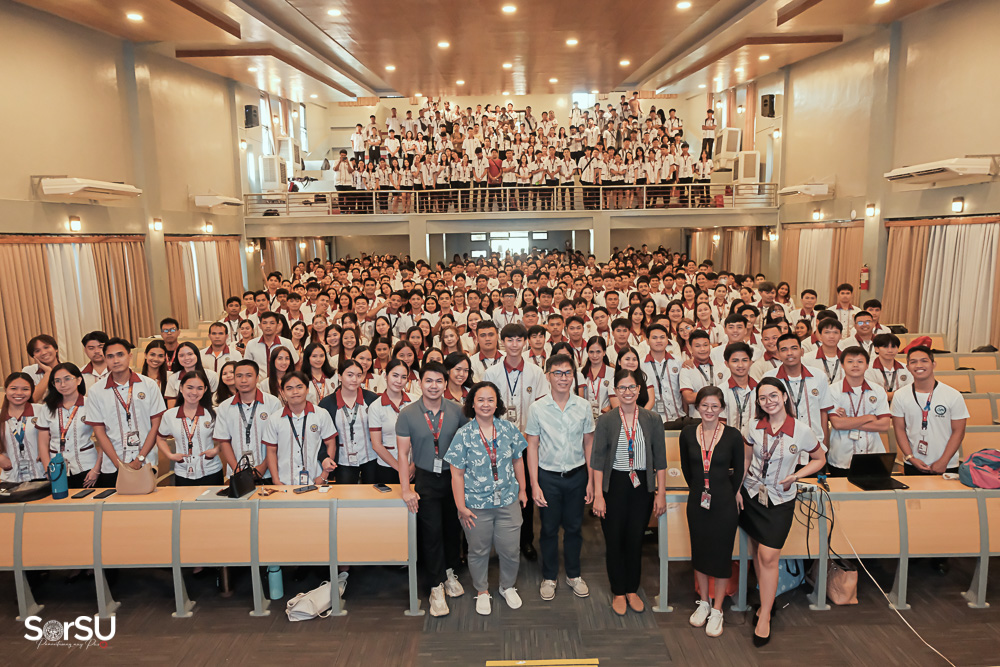
As a University with a Heart, SorSU remains committed to creating a safe, respectful, and inclusive campus where no student is left behind. To support this, the University continues to raise awareness on gender-based sexual harassment and ensures that all students feel protected throughout their academic journey.
Our Committee on Decorum and Investigation (CODI) is here to help uphold fairness and accountability within the University. CODI handles administrative cases involving staff or employees, as well as complaints related to sexual harassment, guided by the Revised Administrative Disciplinary Rules and the SorSU Code of Conduct on Gender-Based Sexual Harassment.
If you ever feel unsafe, disrespected, or uncertain about how to report an incident, know that the University is here to listen, protect, and take action.
You may visit the following designated offices or reach out via their official email:
Office of Gender and Development (GAD) – Email: [email protected]
Office of Student Development and Services (OSDS) – Email: [email protected]
Guidance and Counselling Office – Email: [email protected]
Office of the SorSU President – Email: [email protected]
SorSU CODE OF CONDUCT FOR GENDER-BASED SEXUAL HARASSMENT
Click the colored tab below to learn more about the Code of Conduct for Gender-Based Sexual Harassment or visit SorSU Student Handbook (Code of Conduct for Gender-Based Sexual Harassment pages 50-59).
Overview
The guidelines, general policies and development of code of conduct of Gender-Based Sexual Harassment (GBSH) is based on Republic Act/s and CHED Memorandum. GBSH refers to an act, or a series of acts, involving any unwelcome sexual advances, requests or demands for sexual favors or other verbal or physical behaviors of a sexual nature committed by any individual.
The higher education institution is a public space; hence it is covered by the different forms of Street-Level and Public Space GBSH which includes but are not limited to:
1. Catcalling, wolf-whistling;
2. Unwanted invitations, relentless requests for personal details, statement of sexual comments and suggestions;
3. Misogynistic, transphobic, homophobic, and sexist slurs;
4. When the sexual advances result in an intimidating, hostile or offensive environment for the student;
5. Persistent uninvited comments or gestures on a person’s appearance;
6. Statements, comments, and suggestions with sexual innuendoes;
7. Persistent telling of sexual jokes; use of sexual names;
8. Public masturbation or flashing of private parts, groping, stalking; or
9. Any advances, whether verbal or physical, that are unwanted and have threatened one’s sense of personal space and physical safety.
In the digital world, online gender-based sexual harassment includes:
1. Acts of a sexual nature that use information and communications technology in terrorizing and intimidating victims through physical, psychological, and/or emotional threats;
2. Unwanted sexual misogynistic, transphobic, homophobic, and sexist remarks and/or comments online, whether publicly or through direct and private messages;
3. invasion of victim’s privacy through cyberstalking and incessant messaging;
4. uploading and sharing without the consent of the victim, any form of media that contains photos, voice, or video with sexual content;
5. any unauthorized recording and sharing of any of the victim’s photos, videos, or any information online;
6. impersonating identities of victims online or posting lies about victims to harm their reputation; or
7. filing false abuse reports to online platforms to silence victims
OFFENSES AND PENALTIES (As stated in CHED Memorandum)
| Person’s Liable | Sexual Offenses | Penalties |
| Person in a peer relationship with the offended party (student vs. student) | • Unwanted touching of private parts of the body (genitalia, buttocks and breasts) • Rape or sexual assault • Malicious touching • Public masturbation or the flashing of private parts • Groping, or any advances, whether verbal or physical, that are unwanted and threaten one’s sense of personal space and physical safety committed in public space • Uploading and/or sharing without the consent of the victim, any form of media that contains photo, audio, or video with sexual content • Any unauthorized recording and/or sharing of any of the victim’s photos, videos, or any information online • Impersonating identities of victims online or posting lies of a sexual nature about the victims to harm their reputation • Filing false abuse reports to online platforms to silence victims of sexual harassment • Stalking • Other analogous cases | Expulsion |
LESS GRAVE OFFENSES
| Person’s Liable | Sexual Offenses | 1st Offense | 2nd Offense |
| Person in a peer relationship with the offended party (student vs. student) | • Unwanted touching or brushing against a victim’s body • Pinching not falling under major offenses • Derogatory or degrading remarks or innuendoes directed toward the members of one sex, or one’s sexual orientation or used to describe a person • Verbal abuse with sexual overtones • Unwanted invitations with sexual undertone • Misogynistic, transphobic, homophobic and sexist slurs • Persistent uninvited comments or gestures on a person’s appearance • Relentless requests for personal details • Incessant messaging • Making statements, comments and suggestions with sexual innuendoes • The use of ICT in terrorizing and intimidating victims through physical, psychological, and/or emotional threats with sexual overtones • Other analogous cases | Suspension of one month and one day to three months; | Exclusion/ Dismissal |
LIGHT OFFENSES
| Persons liable | Sexual Offenses | 1st Offense | 2nd Offense | 3rd Offense |
| Person in a peer relation-ship with the offended party (student vs. student) | • Surreptitiously looking or staring at a person’s private part or worn undergarments • Making sexist statements and smutty jokes or sending these through texts, email or similar means, causing embarrassment or offense and carried out after the respondent has been advised that they are offensive or embarrassing or even without such advice, when they are by their nature clearly embarrassing, offensive or vulgar • Malicious leering or ogling • The display of sexually offensive pictures, materials or graffiti • Unwelcome inquiries or comments about a person’s sex life or sexual orientation connoting one’s sex life (e.x LGBTQ’s sexual relations) • Unwelcome sexual flirtation, advances, propositions • Making offensive hand or body gestures at the person • Persistent unwanted attention with sexual overtones • Unwelcome phone calls with sexual overtones causing discomfort, embarrassment, offense or insult to the receiver • Catcalling and/or wolf-whistling • Unwanted sexual misogynistic, transphobic and homophobic remarks and comments online, whether publicly or through direct and private messages • Invasion of the victim’s privacy through cyberstalking and incessant messaging with sexual overtones • Other analogous cases. | Reprimand | Suspension of 1 day to 30 days | Exclusion/Dismissal |
Imposition of Penalties. Minor students who, at the time of the commission of the sexual offense, are found guilty under these Code by the Disciplining Authority, shall undergo gender-sensitivity training and psychosocial counseling. If the penalty of expulsion or exclusion is imposed upon a student, the same shall be subject to the confirmatory authority of CHED pursuant to current Republic Act on GBSH.
Accessory Penalty. A student shall not be allowed to graduate if he/she has a pending case of gender-based sexual harassment or other similar sexual offense. The SorSU reserves the right to revoke a student’s diploma if it was inadvertently issued while a case for GBSH and other similar offenses is pending against the student at the time of its conferment.
Any fees to be charged in the course of a victim’s availment of psychosocial counseling and similar services shall be borne by the respondent proven guilty of the offense/s charged.
SorSU COMMITTEE ON DECORUM AND INVESTIGATION (CODI)
Click the colored tab below to learn more about the Committee on Decorum and Investigation (CODI) and how it can help you.
Overview
The purpose of this committee is to implement and enforce (1) the Revised Administrative, Disciplinary Rules on Sexual Harassment Cases; (2) the Guidelines on Gender-Based Sexual Harassment in Higher Education Institutions; (3) the SorSU Student Handbook on Sexual Harassment and Gender-Based Sexual Harassment; (4) and other related laws and issuances.
See attachments:
(PDF) OP Office Order No. 421 s. 2022 – Creation of Preliminary Investigation Committee (PlC) and Committee on Decorum and investigation (CODI)
(PDF) OP Office Order No. 065 s. 2024 – Updates on the University Committee on Decorum and Investigation (CODI)
(PDF) The Preliminary Investigation Committee (PIC) and the Committee on Decorum and Investigation (CODI) in the Sorsogon State University
CODI Composition
Composition. For the implementation and enforcement of these Rules of Conduct and Discipline the CODI is hereby created based on current Republic Act/s and CHED Issuances. The committee is composed of the following:
Chairperson – Must be a woman (duly designated by the Incumbent President)
Vice-Chairperson – Representative from the School Administrator
Members:
Representative from Supervisory Rank
Representative from Gender Focal Point System (GFPS)
Representative from the Guidance and Counseling Services
Representative from the Faculty (as the case maybe)
Representative from Rank and File Employees
Representative from the Student Body
The composition of the committee is subject to modification based on Republic Acts and CHED Issuances.
Every CODI shall be headed by a woman who shall be designated by the Incumbent President, and membership shall be divided equally between men and women, provided not less than half are women. The School Head or the Head of the Institution may include representatives from equal representation from persons of diverse sexual orientation, gender identity and/or expression, as far as practicable. The Head of Institution may also invite representatives from other groups, as may be applicable.
A permanent alternate of each regular member shall be designated who shall act on their behalf in case of absence, temporary incapacity or voluntary or involuntary inhibition of the regular member and must have the authority to render decision so as not to delay the proceedings being undertaken and to ensure continuity of deliberation.
POWERS AND FUNCTIONS
The following functions shall be exercised by the Committee, specifically:
a. Receive complaints of sexual harassment and other similar sexual offenses;
b. Investigate complaints for sexual harassment and other similar offenses by conducting preliminary investigation in accordance with the prescribed procedure;
c. Observe, at all times, due process in the conduct of investigation;
d. Within ten (10) days from the receipt of the written complaint, investigate and decide on the case and submit a report of its findings with the corresponding recommendation to the disciplining authority for decision;
e. Ensure the protection of the complainant from retaliation and guarantee confidentiality to the greatest extent possible as well as ensure that the person complained of is given the opportunity to be properly notified and respond to the charge/s and that parties are given information on the investigation and its outcomes; and
f. Guarantee gender-sensitive handling of cases, confidentiality of the identity of the parties and the proceedings to the greatest extent possible
g. Undergo continuing training on gender sensitivity, gender-based violence, sexual orientation, gender identity and expression and other GAD topics as needed
h. Lead in the conduct of discussions about sexual harassment and other related sexual offenses within the University to increase understanding and prevent incidents of sexual harassment
i. Conduct such other activities that would engender a safe environment for all genders, especially women, in school campuses and training-related programs in the University
The members of the CODI should have no prior record of involvement as a respondent or defendant in any case of whatever nature of sexual harassment, including those which are still pending. When the complainant or the person complained of is a member of the CODI, he/she shall be disqualified from being a member thereof.
The complainant or the person complained of may request a member of the CODI to inhibit, or the CODI member by himself/herself, at his/her own initiative, cause the inhibition on the grounds of conflict of interest, manifest partiality, and other reasonable grounds. Upon inhibition, the member shall be disqualified from participating in the investigation and he/she shall immediately be replaced so as not to cause a delay in the proceedings.
PROCEDURAL REQUIREMENTS
Pre-filing Stage. Before the filing of complaint, the SorSU, through its Gender and Development Office, shall adopt mechanisms to provide assistance to alleged victim of sexual harassment and other similar sexual offenses which may include counselling, referral to an agency offering professional help, and advice on options readily available.
Complaint. The complaint may be filed at any time with the President of the SorSU, the Guidance Office, the GAD Office, Discipline Office, Security Office, the CODI or the CHED Regional Office V. Upon receipt of the complaint by any of the above offices, it shall be transmitted to the CODI.
The complaint in duplicate copies shall be written in a clear, simple, and concise language and in a systematic manner as to apprise the person complained of, of the nature and cause of the accusation against him/her and to enable him/her to intelligently prepare his/her defense or counter-affidavit. It shall contain the following:
a. Full name, address, and contact details of the complainant. The filing of an anonymous complaint is not prohibited;
b. Full name, address, and contact details of the person complained of and his/her position and office, if known to the complainant;
c. A narration and statement of the relevant and material facts which shows the sexual harassment and other similar sexual offenses;
d. Evidence to support the allegation, provided that non-submission of proof will not cause the dismissal of the complaint;
e. Certified true copies of documentary evidence and affidavits of his/her witnesses, if any; and
f. Certification or statement of non-forum shopping;
g. If the complaint is not under oath, complainant shall be summoned by CODI to swear to the truth of allegations in the complaint or require complainant to submit a sworn complaint within 24 hours from receipt of notice of compliance.
The withdrawal of the complaint at any stage of the proceedings shall be without prejudice for the CODI to continue its investigation and make a report of its findings and recommendation to the Disciplining Authority when the evidence warrants.
Action on the Complaint. Upon receipt of the complaint, the CODI shall convene and evaluate the same and shall: (a) proceed with the investigation if the complaint is sufficient in form and substance.
Preliminary Investigation. The CODI shall, at all times, observe due process and investigate and decide on the complaint within ten (10) working days or less upon receipt thereof. It shall observe the following procedural requirements:
a. Within 24 hours from the receipt of complaint, the CODI shall commence the investigation by informing, through a notice, the person complained of with the complaint filed against him/her. The notice shall include a directive to the person complained of to submit his/her Counter-Affidavit/Comment under oath along with evidence in his/her defense within 72 hours from receipt of the notice, to the CODI, and the complainant.
b. Upon receipt by the CODI, it shall conduct an ex parte examination of the documents submitted by the parties, including available records of the case.
Investigation Report. Within five (5) days from the termination of the preliminary investigation, the PIC shall submit the CODI Investigation Report and Recommendation finding the existence or non-existence of a prima facie case and a recommendation to either dismiss or proceed with the issuance of a formal charge against the person complained of along with the complete records of the case to the Disciplining Authority.
When case is decided. The Disciplining Authority shall decide the case within thirty (30) days of receipt of the CODI Investigation Report and Recommendation. If the penalty is expulsion, dismissal, suspension for more than thirty (30) days, the respondent may file an appeal within fifteen (15) days before the disciplining authority. The decision is final and executory after the lapse of reglementary period for filing a motion for reconsideration or an appeal, and no such pleading has been filed. The disciplining authority shall act or decide on the motion for reconsideration within thirty (30) days of receipt thereof.
Parallel and Complimentary Actions. Nothing in these Guidelines shall be constructed to limit the rights of the victims of GBSH from pursuing civil, criminal and other legal actions as may be provided by the law.
Confidentiality. The proceedings and the identity of parties during the preliminary investigation shall be strictly confidential. The SorSU shall take steps to ensure and protect the privileged nature of the proceedings.
Miscellaneous Provision. In case of deficiency, the provisions of RA 11313 or the Safe Spaces Act and CHED Memorandum Order No. 3 s.2022 shall supplement the Student Handbook.




Related Links:
(PDF) OP Office Order No. 421 s. 2022 – Creation of Preliminary Investigation Committee (PlC) and Committee on Decorum and investigation (CODI)
(PDF) OP Office Order No. 065 s. 2024 – Updates on the University Committee on Decorum and Investigation (CODI)
(PDF) The Preliminary Investigation Committee (PIC) and the Committee on Decorum and Investigation (CODI) in the Sorsogon State University
SorSU Student Handbook (Code of Conduct for Gender-Based Sexual Harassment pages 50-59)